Possibly, and the case is better than most supplement claims. Pyrroloquinoline quinone (PQQ) activates the same cellular signal that tells cells to build new mitochondria, and lab studies show this clearly. Human evidence is smaller: a few short trials show lower inflammation markers and energy-related changes, but direct proof of new mitochondria in people is still missing. Think of PQQ as a promising supporting player rather than a proven builder.
What Is PQQ and Where Does It Come From?
PQQ is a small, water-soluble compound found in soil, plants, and animal tissue. Fermented soy foods, tea, fruits, and vegetables all contain traces of it, and researchers estimate that a typical diet supplies roughly 0.1 to 1 milligram per day.
What makes PQQ interesting is what happens when it goes missing. Mice and rats fed diets without it had reduced mitochondrial content, which is why some scientists call PQQ a vitamin-like nutrient. It has not earned official vitamin status, but the pattern suggests your cells put it to real use.
How PQQ May Signal Cells to Build New Mitochondria
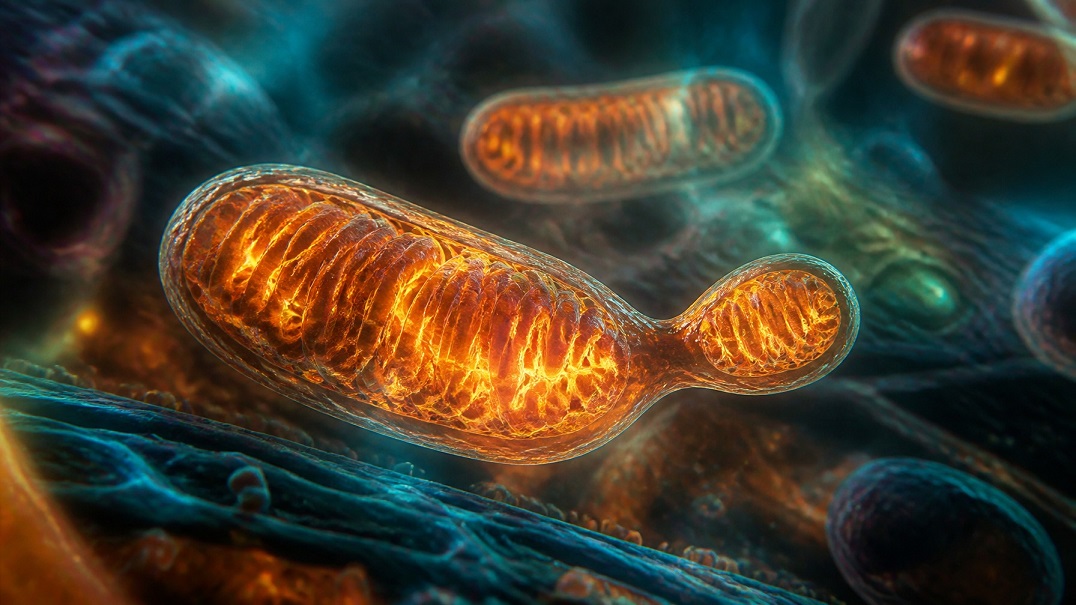
Mitochondria turn food into usable cellular energy, and they become fewer and less efficient with age. If you want the full background, our guide to mitochondria and aging covers it. Cells can make new mitochondria through a process called mitochondrial biogenesis, and its main controller is a protein named PGC-1α.
In a 2010 study on mouse liver cells, PQQ activated a messenger protein called CREB, which switched on PGC-1α. The cells then showed more mitochondrial DNA and higher activity of cytochrome c oxidase, a key energy enzyme. When researchers lowered either CREB or PGC-1α, PQQ stopped working, which points to that pathway as the real route, according to the original study. A 2017 study in mouse fibroblasts reached a similar result using very low PQQ concentrations.
What Human Studies Show So Far
The best-known human study is small. In a 2013 crossover trial, ten volunteers took PQQ and researchers tested their blood and urine afterward. PQQ lowered C-reactive protein and interleukin-6, two inflammation markers, and shifted urinary metabolites in ways consistent with improved mitochondrial function.
That is encouraging, but the measurements covered only about three days in ten people. Smaller trials on exercise and cognition have produced modest or mixed results, and none of them counted new mitochondria directly.
So what can we say honestly? PQQ reliably triggers biogenesis signaling in cells, and early human data lean the same direction. Whether that adds measurably more mitochondria to your muscles or brain remains an open question.
PQQ, NAD+, and the Sirtuin Connection
Here is where PQQ becomes relevant to an NAD+ stack. The 2017 fibroblast study found that PQQ’s effect depended on SIRT1, a sirtuin enzyme that needs NAD+ to work. When researchers blocked SIRT1, PQQ lost much of its power, and the authors suggested PQQ may enhance cellular NAD+ formation.
That fits neatly with what we know about sirtuins, which we explain in our breakdown of sirtuins, AMPK, and mTOR. NAD+ levels also decline with age, as covered in how NAD+ levels change as you age.
One reasonable hypothesis follows. An NAD+ precursor such as NMN supplies raw material, while PQQ nudges the signaling that puts that NAD+ to work. To be clear, this is a hypothesis. No human trial has tested the pairing.
PQQ Dosage, Food Sources, and Safety
Capsules commonly contain 10 to 20 milligrams, far more than food provides. If you prefer the dietary route, natto and other fermented soy foods, tea, and a varied range of fruits and vegetables all contribute small amounts.
European regulators cleared PQQ for use in supplements in 2018, and the short human studies have not raised major red flags. Long-term safety data are still limited, though, and very little is known about use during pregnancy, breastfeeding, or alongside prescription drugs. Ask your doctor first if any of those apply to you.
Is PQQ Worth Adding to Your Longevity Stack?
If your foundation is already solid, with consistent sleep, regular exercise, and good nutrition, PQQ is a sensible and low-risk experiment. It pairs logically with an NAD+ precursor, and it has a clear, testable mechanism, which is rare in the supplement world.
PQQ Frequently Asked Questions
Does PQQ Really Create New Mitochondria?
In cell and animal studies, yes. PQQ activates the CREB and PGC-1α pathway that drives mitochondrial biogenesis. In people, researchers have seen markers consistent with improved mitochondrial function, but no study has directly counted new mitochondria after supplementation.
Can I Take PQQ With NMN?
Many people do, and no known interaction exists between them. The logic is that NMN raises NAD+ while PQQ supports SIRT1 and PGC-1α signaling. No clinical trial has tested the combination, so it remains theoretical. Check with your doctor first.
What Foods Contain PQQ?
Fermented soy products such as natto, tea, and many fruits and vegetables contain small amounts. A typical diet supplies about 0.1 to 1 milligram daily, far below the amounts found in most supplements.
Is PQQ Safe to Take Every Day?
Short-term human studies have not flagged serious problems, and European regulators cleared it for supplements in 2018. Long-term data are limited, so people who are pregnant, breastfeeding, or taking medication should consult a doctor before starting.